

Minoxidil is one of the only topical treatments available to treat androgenetic alopecia. It is a medication that has been proven to be effective and non-toxic in clinical trials.
However, the effectiveness of a medication varies from person to person. I personally used Minoxidil 2% and then 5% to treat my androgenic alopecia for almost 10 years.
Was it effective for me? Did I experience a "shedding effect" that aggravated my androgenic alopecia or other undesirable side effects? How is it applied? What happens when you stop after several years of treatment? How did I feel psychologically about applying this treatment every day for years? I'll tell you everything in this article!
20 years old: I am diagnosed with androgenic alopecia and start using 2% Minoxidil.
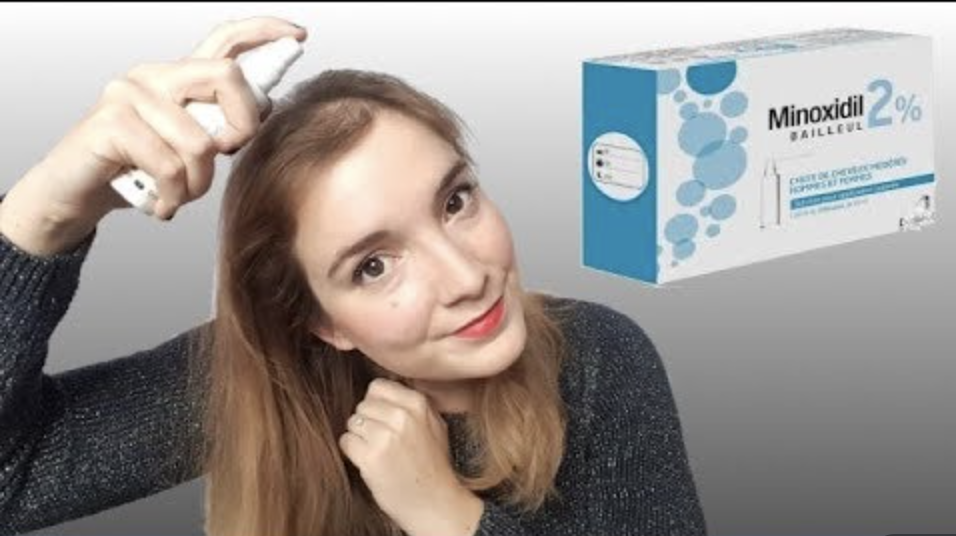
My dermatologist diagnosed me with androgenic alopecia at the age of 20. At the time, my hair loss wasn't really very noticeable. I was just starting to notice that my hairline was receding and my hair was thinning a little. This alarmed my close friends and family, who urged me to see a specialist. After some blood tests and iron and vitamin supplements, my dermatologist prescribed a 2% minoxidil treatment.
I decided to undergo this treatment because, at the time, it was my only source of hope in the face of this condition. I told myself that I had to at least try to do something to keep my hair for as long as possible. I was very afraid of the future, of what I would look like at 30, 40, and 50. It's really hard to learn at 20 that you might become very bald within ten years because of this. It's one of the hardest things to deal with after being diagnosed with androgenic alopecia.
I was quite sad to have to apply this solution to my scalp every day. I found it unfair and humiliating to have to do this every day to have hair like my friends, like all other women. It should have been a given. I shouldn't have had to fight for it. But I didn't feel like I had a choice.

I use Bailleul brand 2% Minoxidil. When applied morning and evening, the product makes the hair slightly greasy, but fortunately it dries quickly. However, the hair roots remain quite dull. It is important not to apply the product before washing your hair. This means that you have to do it after shampooing. The problem for me was that I never felt like my hair was clean anymore.
Because even though my hair was clean and shiny after shampooing, I had to apply the product that same evening and again the next morning, and my hair felt dirty again. I found this quite difficult to cope with during the treatment.
It is important to wash your hands thoroughly after application, as well as any areas where the product has dripped onto your face, such as your forehead and temples. If you don't do this properly, which I have sometimes failed to do, you may find that fine hairs start to grow in these areas. I was surprised to see very fine hairs growing on my temples!
Among the side effects of Minoxidil, some people experience a "shedding effect." In fact, in the first few weeks of treatment, Minoxidil sometimes causes accelerated hair loss of hair that was about to fall out (hair in the telogen phase), before regrowth occurs. I did not experience any shedding effect. This was not necessarily something I was particularly worried about, as it was supposed to be followed by regrowth anyway.
Regarding the effectiveness of Minoxidil 2% for androgenic alopecia, I admit that I have never seen any obvious results. I did experience some slight hair regrowth at times on the top of my head, but I didn't know if this was normal (normal hair growth) or if it was related to the product. In any case, the effect was never obvious and my hair was still thin, even though my alopecia was still in its early stages at the time.
Minoxidil, on the other hand, had a clear effect on me: it made me focus a little more each day on my alopecia. At a time when I could have been enjoying life, my youth, and my thick hair thinking too much about it. But when you're diagnosed with androgenic alopecia, it's hard to tell yourself that you're not going to do anything to stop the hair loss. Applying this product twice a day was particularly destructive for me psychologically.
Every day, in front of the mirror, I had to face the fact that I was losing my hair and that I had to apply an oily product to my thinning scalp to counteract this. My hair roots were dull seven days a week.
I felt very guilty when I decided not to follow the treatment regularly. I remember that every Saturday night, I would go to sleep at my boyfriend's house and I didn't want to apply the product in front of him. I didn't want to ruin our evening with it. He knew about my alopecia and the treatment I was following. But I just didn't want to spoil our good times with my alopecia. On the other hand, I felt guilty for not being strict enough. I told myself that maybe that was why I wasn't seeing any convincing results...
Five years later, I switched to Minoxidil 5%.
In the absence of satisfactory results, I decided to consult another dermatologist at the Sabouraud Center a few years later. I was hopeful that I might be diagnosed with another condition or that I would be offered a more effective treatment. I found myself in a waiting room with brochures for wigs, which, at the time, did not really reassure me! I was diagnosed with advanced androgenetic alopecia in two minutes flat, including an examination of my scalp! The dermatologist then prescribed Androcure (a treatment I refused) and 5% Minoxidil.
Minoxidil 5% is more strongly dosed than 2% and is normally prescribed only to men with androgenic alopecia because it has undesirable side effects in women. However, some dermatologists prescribe it to women when Minoxidil 2% is not effective enough.
I experienced significant scalp itching with Minoxidil 5%. I spent hours scratching my head with this formulation. The product caused a burning sensation. However, I continued because I was determined to find an effective treatment for myself, and above all, I was afraid to stop. After a few months, the itching subsided. I also had many migraines during this period, without really knowing if it was due to Minoxidil or not.
I did not notice any greater effectiveness with Minoxidil 5% compared to 2%. I did not experience any more regrowth and saw no difference in my alopecia. Well, actually, I did have the good fortune to have two or three curly hairs grow on the tops of my feet, which was not really the desired effect!
At 29, I'm calling it quits!
As the years went by, I found this treatment increasingly difficult to follow on a daily basis. I was really starting to get fed up because it wasn't working for me. At the age of 29, my partner and I decided to have a baby. The question arose as to whether I should continue the treatment while trying to conceive and then during pregnancy. But given the product's lack of effectiveness, I quickly decided not to take any unnecessary risks for my baby for such poor results. I must admit that I was also very happy and relieved to stop all that. But I told myself that I would resume treatment after pregnancy.
During the first few months without Minoxidil (before becoming pregnant), I did not notice any difference after stopping the product. After my first pregnancy and delivery, I never had the desire or energy to resume treatment. I already had enough to do with my baby, and my hair was far from being my priority at that time. In addition, I breastfed my daughter for two years and did not want to take the treatment while breastfeeding.
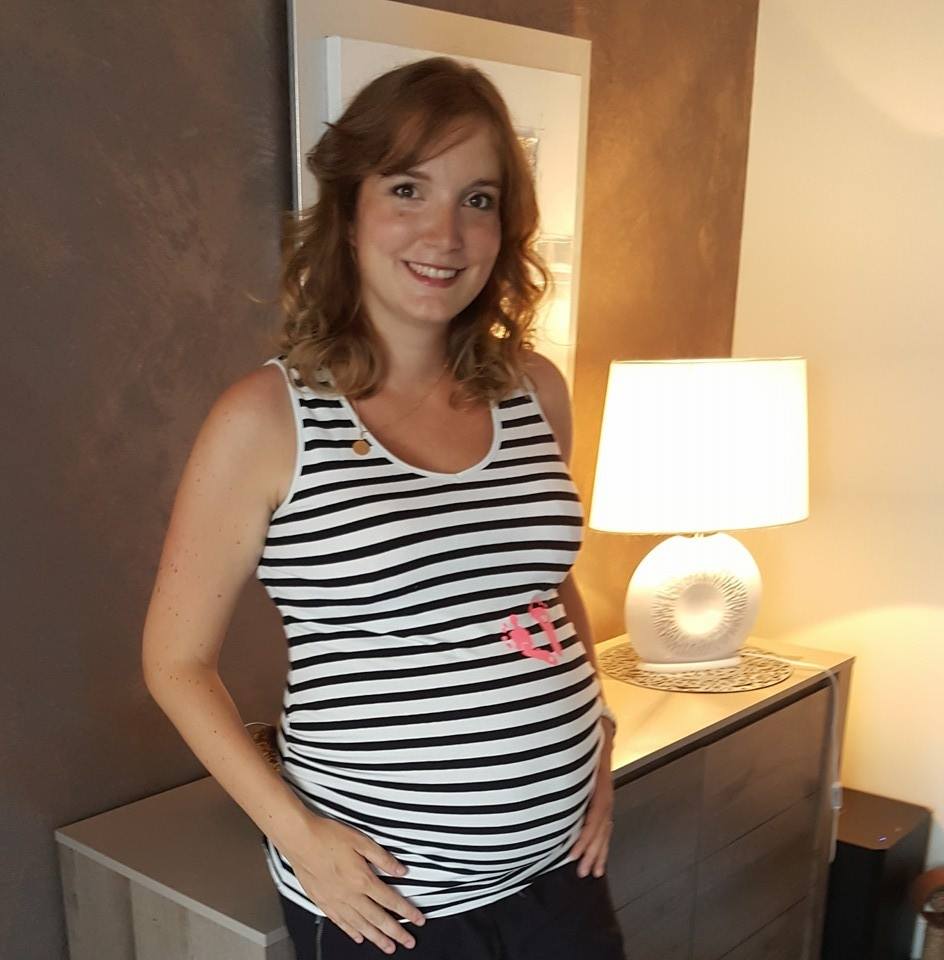

After two years of breastfeeding, my androgenic alopecia had progressed significantly. Was this due to stopping Minoxidil or to hormonal changes during pregnancy and postpartum? A little of both? I will never know. I should mention that during this period I also took a pill compatible with breastfeeding, Optimizette, which has the side effect of aggravating alopecia...
Despite my worsening alopecia, I have decided not to resume using the product. I no longer have the energy for it, I no longer believe in it, and this treatment is too much of a burden for me for too little result. These two years without taking it have been liberating for me.
My androgenic alopecia is progressing, I switch to hair topper and it's changing my life!
Two years after my daughter was born, my alopecia became visible to others. I don't have any photos to share, because I stopped taking photos of myself once my alopecia became visible...
One day, a colleague at work stares at my alopecia while I'm on a coffee break and chatting with other colleagues. I realised that this was a pivotal moment when my alopecia became visible to others. It is out of the question for me to become a subject of discussion or pity. I have known about hair hair toppers for 4 years. I had time to get used to the idea that it might be the only really effective solution for me. Initially, the idea was quite difficult to accept, but the years have helped me to accept it gradually.
So, at the age of 30, I walked through the door of a hair replacement salon for the first time hair started wearing a topper hide the effects of my androgenetic alopecia. It was extremely liberating for me. It helped me rebuild myself and feel beautiful again.

This experiment with androgenic alopecia, Minoxidil 2% and 5% and hair topper was shared on YouTube. If you are interested, feel free to check out the videos
Find other videos on my YouTube channel: the Comme un diadème channel.
Many of the women I work with try Minoxidil, sometimes for years, before discovering that a non-medical solution could help them on a daily basis.
👉If you are looking for an immediate, lightweight, and undetectable alternative,you can check out the models I recommend for each type of alopecia here:




Hello Laure, I myself used minoxidil for years, but I was undergoing heavy hormone treatment and as soon as I stopped, the minoxidil had no effect on my hair loss, despite my diligence... Those years of minoxidil left me with a sensitive scalp (repeated redness, etc.).
This medication caused fine hair to grow on my temples...
Hello Laure, do you have any testimonials about other treatments such as spirinolactone, for example? Thank you very much 🙂
Hello, no, I don't have any testimonials about this type of treatment.
Hello
I used Minoxidil for two years, without any convincing results. Previously, I had taken Androcur for several years without being warned of the risks (brain tumor), but when I changed doctors, he had me stop this treatment.
I stopped using Minoxidil a few months ago, and my alopecia has gotten much worse.
I have just decided to start again, this time with 5%, but I am also thinking of taking steps to get a wig or other hair prosthesis hair a specialist. It is expensive, but I read on the internet that with a prescription it could be partially covered by social security and mutual insurance.
Minoxidil is a good treatment for hair loss. It has been tested by several people and has produced good results.
Hello
A doctor friend advised me to order or have a pharmacy make an EPS Nettle Root and take it for 4 months. This nettle-based treatment is designed to reduce testosterone, which is responsible for alopecia. I'm going to start and let you know more in 4 months.
Hello Virginie,
At this stage, do you have any feedback for us on this nettle-based treatment? What should we ask the pharmacist?
Thank you in advance for your feedback,
Cyr
Hello Virginie, have you seen any results with the nettle EPS, even though it hasn't been four months yet? I'm tempted to try it too.
Thank you
Hello Laure, I myself used minoxidil for years and spent hundreds of euros, only to end up with no results 😕
Hello, I just read your testimonial because I also have androgenetic alopecia, which is starting to become quite noticeable. I have never taken minoxidyl, but I have tried quite a few dietary supplements. One that is very effective is Forte Pharma Expert Anti-Hair Loss. It won't regrow lost hair, but it significantly reduces hair loss. And you have to take it for life. As soon as I stop, I see the difference, but it's just one capsule a day, which is much less restrictive.
Thank you for sharing your experience because I didn't want to start using minoxidil and this confirms my decision.
Hello, I'm not convinced by the results of Minoxidil 5% either. There is a (slight) tendency for hair to grow back, but it disappears as soon as I stop using the product. What annoys me even more is the packaging. The push button regularly gets stuck and you lose product trying to unstick it. I end up getting it everywhere... except on my hair! I called them. I'm not the only one with this problem, because the person who answered my call thought I was someone else who was also unhappy. The solution they offered was so ridiculous and complicated that I didn't do anything (try to convince my pharmacist to give me one for three, then send I don't know what, etc.).
That doesn't stop them from selling it prominently in pharmacies.