

We all know at least one person in our circle (family, friends, acquaintances, coworkers, etc.) who suffers from alopecia, and it is often difficult to know how to respond. Should we tell them that we think they have alopecia? Or should we spare their feelings? It's always tricky to find the right words, and it's a question I'm asked very often, which is why I decided to write this article to give you some advice on how to behave around someone with this condition.
There are three different scenarios concerning alopecia.
Case #1: Someone close to you has noticed your hair loss and brings it up spontaneously.
Sometimes, someone close to you may spontaneously mention their hair loss (which you may have already noticed). In this situation, it is important to keep in mind that talking about hair loss is often painful and sensitive for a woman who thinks she may be affected by alopecia. If someone close to you tells you that they have noticed they are losing their hair and are worried about it, I advise you not to deny the problem.
You can tell her that you can't say for sure that she's experiencing hair loss, but that she's the one who knows best what her hair density was to begin with. If she has any doubts, it is best to consult a dermatologist who may be able to reassure her and investigate the causes of her hair loss. It is not our role to determine whether or not someone has alopecia. Hair loss can be temporary, linked to an iron or vitamin D deficiency, for example.
Never forget that anything you say to a loved one about alopecia can affect them deeply and hurt their feelings, so choose your words carefully. What you say could have an impact on their self-confidence, which is why it is important to consider the consequences beforehand.
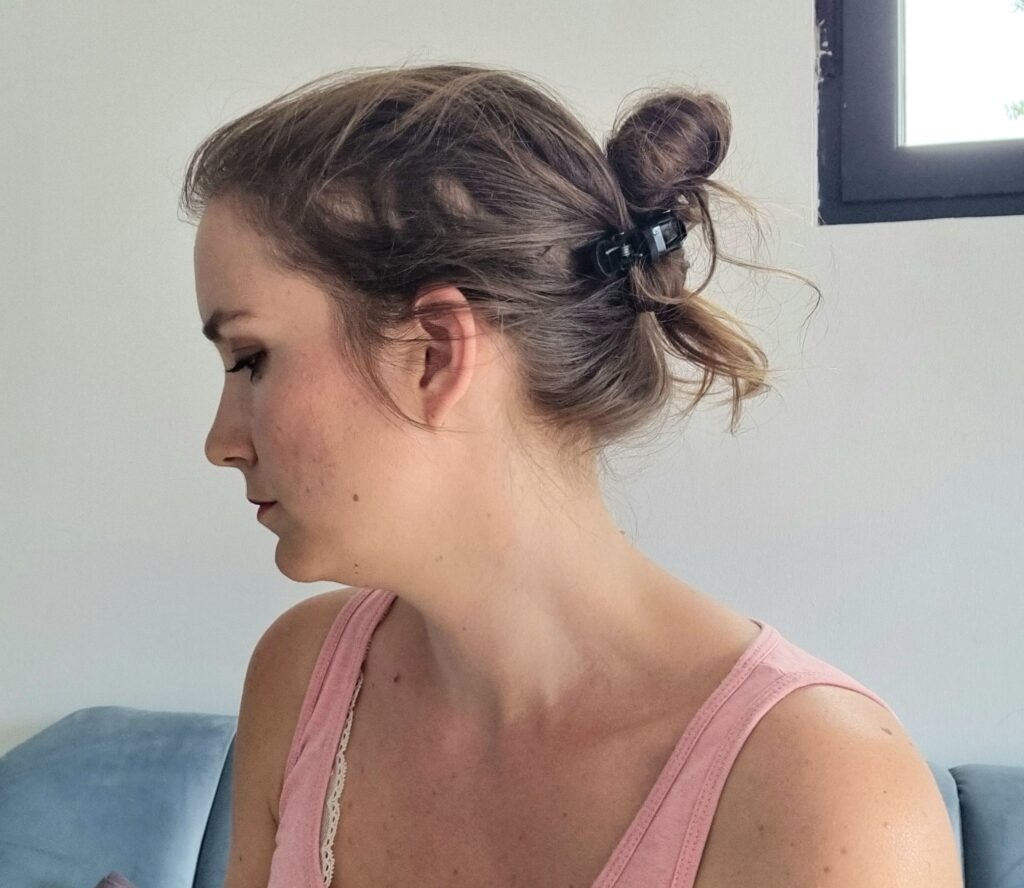
Case #2: The person did not notice their hair loss.
Sometimes, we notice hair loss in someone close to us, but they don't seem to have noticed it at all. In this case, I would advise against mentioning it. If your loved one hasn't noticed anything yet, bringing it up will only cause them to worry, raise questions, and even create complexes that they didn't initially have.
Indeed, especially if the person is young, it is difficult to build and develop self-confidence knowing that you have alopecia that will undoubtedly progress gradually over the years.
I believe it is important to let people find their own way and discover things for themselves. In my case, my mother noticed my androgenetic alopecia when I was 20, at which age I was then diagnosed by a dermatologist. At that age, however, I hadn't noticed anything myself. But it quickly became a complex that I focused on.
Looking back today, I realize that I could have gradually come to this realization a few years later and spared myself three or four years of unnecessary suffering.
However, when your loved one notices that they may have alopecia and mentions it to you one day, it is essential that you refer them to a doctor to confirm or rule out their suspicions.
But if one day she is diagnosed, tell her that there are cosmetic solutions (thickening powder, toppers ) and that you will be there to support her in finding these solutions if she needs them. You can also direct her to social media accounts that have opened up the conversation about alopecia and could be a great source of support for her.

Case 3: The person has noticed their hair loss but has not mentioned it to you.
Sometimes, you may sense that the person is struggling with their alopecia but does not bring up the subject with you. In this case, there is no point in pressuring them or encouraging them to talk to you. If your loved one has not decided to talk to you about it yet, it may be because they do not feel ready or do not feel the need to do so at the moment. When they feel confident and ready to talk to you about it, they will do so naturally.
Perhaps he will also choose not to discuss it with you, in which case you should not force the issue, as alopecia is a private matter and no one is obliged to talk about it, even with their loved ones.
Thank you for your support! Feel free to leave a comment telling me how you are handling this situation 😉
Be yourself and take care! 🙂
To view and order our models, visit our website: Shop – commeundiademe.com
Follow us on social media!
Instagram: Like a tiara (@like.atiara) • Instagram photos and videos
Facebook: Like a tiara | Facebook




I understand what you're saying, but I wish someone had told me earlier. I could have started treatment and addressed the cause once I found it, and maybe I would have more hair and less suffering today. . .