September gives us the opportunity to talk about a subject that is still very taboo in our society: alopecia. In this era of "body positivity," this condition is still shrouded in silence, even though it affects around 20% of women over the age of 40.
What is alopecia?
Alopecia is characterized by partial or total loss of hair, and sometimes body hair, which can take various forms, ranging from diffuse loss to complete baldness.
The psychological impact of alopecia in women
Despite the fact that approximately one in five women is affected by alopecia, this reality is often ignored or downplayed in our society. Although the media is increasingly addressing the subject, the focus is generally on total alopecia, leaving androgenetic alopecia, which is much more common and manifests itself as diffuse and partial hair loss affecting many women, in the shadows. There are also many other types of alopecia (fibrosing alopecia, scarring alopecia, traction alopecia, etc.), but these are also often overshadowed by total alopecia in the media.
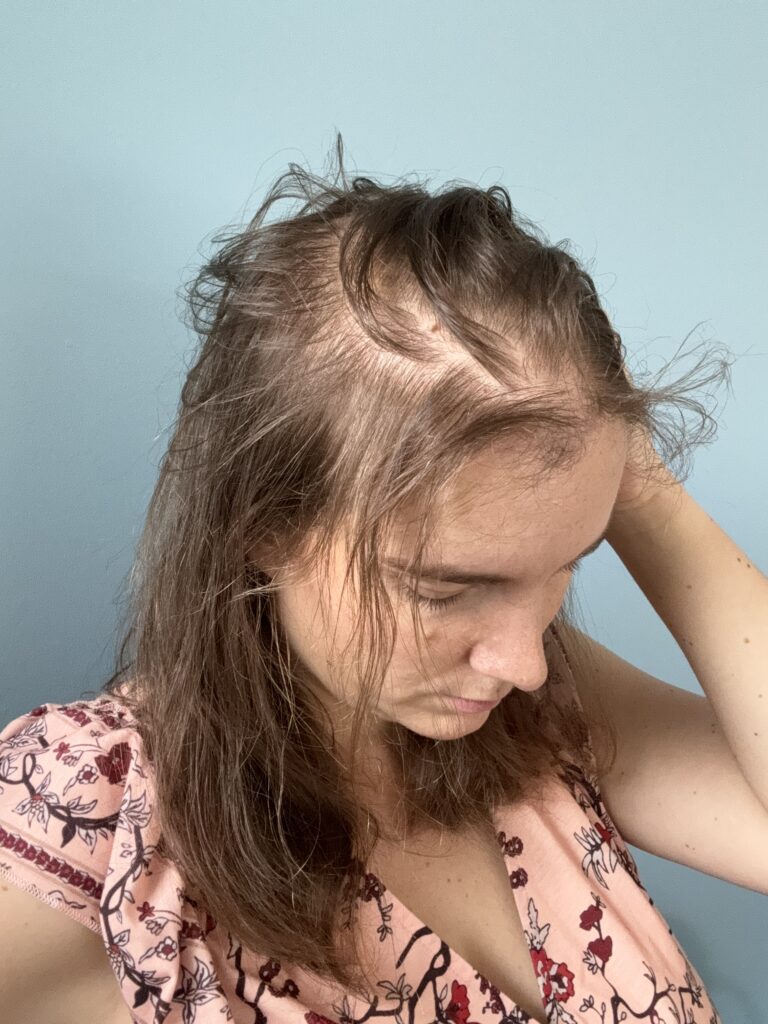
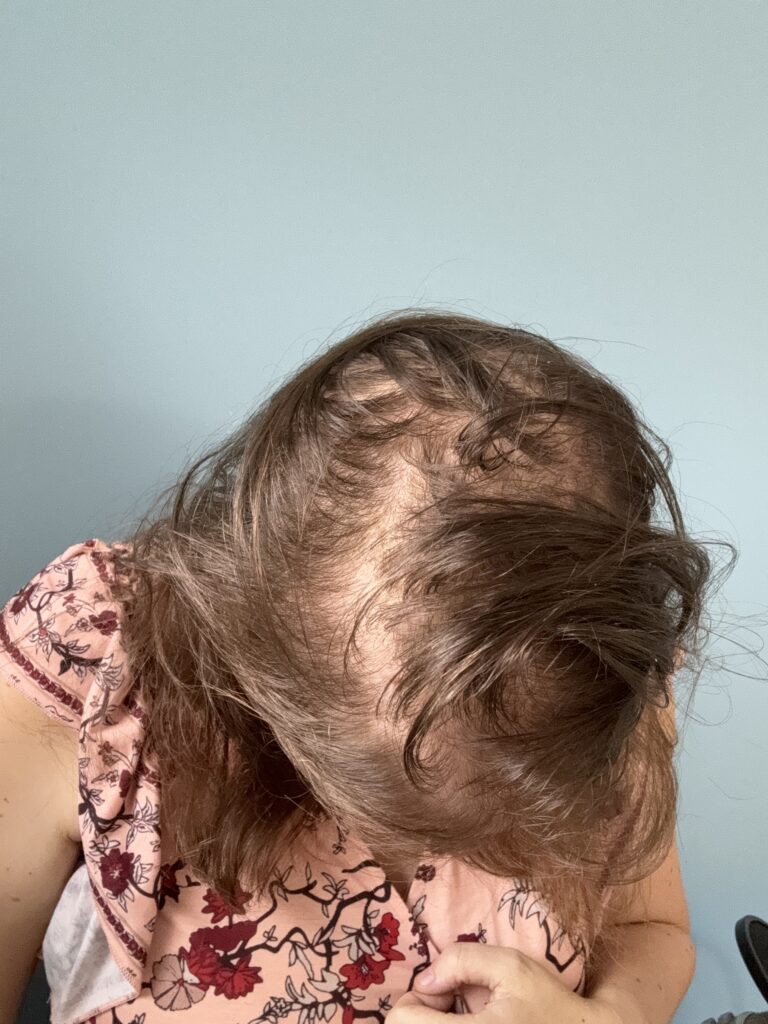
Androgenetic alopecia in women is simply the equivalent of male pattern baldness. The hair of women affected by androgenetic alopecia becomes thinner over time and is irreversible. Treatments exist, such as hormone treatments or minoxidil, but these treatments are only relatively effective and are quite restrictive to take on a daily basis.
Women with alopecia, who often live in the shadow of their suffering, frequently experience a profound psychological impact. Alopecia can significantly affect self-esteem and challenge femininity. Some women no longer dare to go to work or meet new people because of it.
It is crucial not to underestimate the feelings of women facing hair loss. The road to acceptance is long and difficult, and for some, it will remain unfinished. Many continue to search for solutions to slow down or reverse this hair loss process, wasting a great deal of energy (and sometimes money) in the process.
The lack of knowledge on the subject means that these women often feel very alone and isolated, when in fact they need support to move forward.
This awareness month is a valuable opportunity to shine a light on a reality that affects so many women around us. Whether they are in our families, our workplaces, or our daily lives, these women deserve to have this condition, which can have a significant psychological impact, discussed.
Saying no to beauty standards
Society imposes rigid beauty standards, where femininity is often associated with thick, shiny hair. On social media, in magazines, on television, and in movies, women almost always have voluminous, flawless hair. However, some of these women are also affected by alopecia. This reality is often hidden, as they too seek to conceal their hair loss through various means such as toppers or wigs. Unfortunately, this invisibility and lack of diversity create many complexes for those with thinning hair.
It is therefore high time to break this silence and raise awareness about female alopecia. While male baldness is widely recognized, alopecia in women remains a little-known topic. Yet these women exist, and they deserve to be seen and heard.
Like a tiara, it supports and accompanies you
Having suffered from androgenetic alopecia myself, I went through periods marked by a loss of self-confidence and questioning my femininity.
This personal experience led to the creation of Comme un Diadème, whose mission is to break the silence surrounding alopecia, a subject that is still too often taboo in our society, and to provide concrete solutions to women who suffer from it.
With Comme un Diadème, women are not alone in facing their hair loss. We are here to support them, particularly through our videos and podcast episodes on the subject, and if they wish, during the delicate transition to wearing hairpieces or wigs, by offering them a listening ear, guidance, and support.
Please feel free to contact us by email at contact@commeundiademe.com or via WhatsApp at +33 6 95 28 78 85 if you wish ☺️
Join the Comme un diadème community on our social media channels! We talk about hair loss, hair supplements, and more 😉
If you would like to discover toppers and wigs made from natural hair, like a tiara to hide your alopecia: