

We all know at least one person in our circle (family, friends, acquaintances, colleagues...) who suffers from alopecia, and it is often difficult to know what attitude to adopt in this situation. Should we tell her that we think she has alopecia? Or rather protect her? It is always delicate to find the right words, and this is a question I am often asked, which is why I decided to write this article to give you some advice on how to behave with someone affected by this condition.
There are three different scenarios regarding alopecia.
Case #1: The person in your circle has noticed their hair loss and talks to you about it spontaneously
Sometimes a person in your circle spontaneously talks to you about their hair loss (which you may have already noticed). In this situation, it is important to keep in mind that discussing hair loss is often painful and delicate for a woman who thinks she is affected by alopecia. If someone in your circle tells you that they have noticed they are losing their hair and are worried about it, I advise you not to deny the problem.
You can respond that you cannot say with certainty that they are experiencing hair loss, but that they are the best judge of the hair density they had initially. If they have doubts, the best course of action is to consult a dermatologist who may be able to reassure them and investigate the causes of their hair loss. Indeed, it is not our role to assert whether someone has alopecia or not. Especially since hair loss can very well be temporary, related to a deficiency in Iron or Vitamin D for example.
Never forget that every phrase we say to one of our loved ones regarding alopecia can mark and hurt them, so be careful in your choice of words. Indeed, these words may have an impact on their self-confidence, which is why it is important to consider the consequences beforehand.
Case #2: The person has not noticed their alopecia
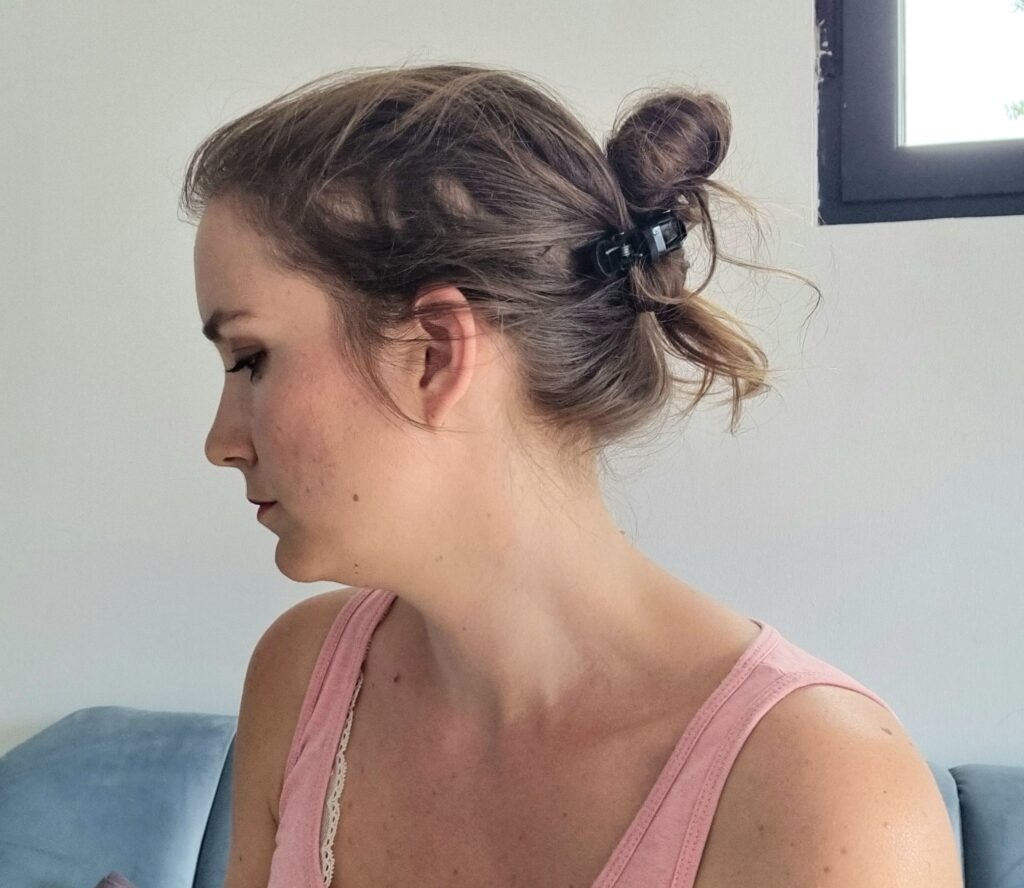
Sometimes, we notice the alopecia of someone in our circle, and they do not seem to have noticed their hair loss at all. In this case, I advise you not to bring it up. Indeed, if your loved one has not noticed anything so far, talking to them about it will only worry them, create questions, or even complexes that they did not initially have.
Indeed, especially if the person is young, it is difficult to build and develop self-confidence knowing that one has alopecia that will likely evolve gradually over the years.
I believe it is therefore important to let the person find their own way and discover it for themselves. For my part, my mother noticed my androgenetic alopecia when I was 20 years old, the age at which a dermatologist later made the diagnosis. At that age, I had not noticed anything myself. But it quickly became a complex that I focused on.
In hindsight today, I realize that I could have gradually noticed it a few years later and spared myself 3 or 4 years of unnecessary suffering.
However, when your loved one notices that they may have alopecia and talks to you about it one day, you must redirect them to a doctor to confirm or dispel their doubts.
But if one day the diagnosis comes despite everything, tell her that there are aesthetic solutions (thickening powder, hair toppers) and that you will be there to support her towards these solutions if she needs it. You can also guide her to social media accounts that have opened up about alopecia and can be a great support for her.

Case #3: The person has noticed their alopecia but does not talk to you about it
Sometimes, you feel that the person is struggling with their alopecia but does not bring up the subject with you. In this case, it is unnecessary to rush them or encourage them to talk to you. Indeed, if your loved one has not decided to talk to you about it for the moment, it is because they may not feel ready or do not feel the need to do so at that moment. When they have confidence in themselves and feel that they want to talk to you about it, they will do so naturally.
Perhaps he will also choose not to discuss it with you, and in that case, do not force things since alopecia is a private matter and no one is obliged to talk about it even with their loved ones.
Thank you for your support! Feel free to let me know in the comments how you manage this situation 😉
Be yourself and take care of yourself! 🙂
To find and order our models, visit our website: Boutique – commeundiademe.com
Follow us on our social media!
Instagram : Comme un diadème (@comme.un.diademe) • Instagram photos and videos
Facebook : Comme un diadème | Facebook











I understand what you're saying, but I would have liked someone to tell me earlier; I could have started treatment and acted on the cause since I found it, and I might have more hair and less suffering today...
Absolutely, me too, especially since I was rightly worried and my loved ones minimized the problem by saying, 'but noooon.' As a result, I lost years of action just like you.
Bonjour
I am 42 years old and I noticed my alopecia at 25 years old.
I have been looking for the right solution for almost 20 years.
I have undergone several treatments: Minoxidil, finasteride, PRP, tricopigmentation, but my hair loss continues even though I have been able to slow it down.
I am a very stylish person and I am increasingly struggling with the fact that I am losing my hair and have thinning hair, especially limited in hairstyles.
I didn't feel ready for the wig because it's hard to accept, but your site and your videos show me that you are completely comfortable with hairpieces, and I think, why not?
The fear is that my loved ones will notice.
How can we proceed for you to advise me?
It's still a budget and I would like to be advised
Merci
Tiziana